

|
NOTE: All the studies we will review are tagged with citation numbers like this: [2] If you “click” on that red number, you will be transported to the actual study. Many of the graphics can also be enlarged by clicking on them.
The Natural Approach For Managing Asthma
It’s estimated that 28 million Americans now suffer from the torment of asthma, causing 11+ million visits to doctors or emergency rooms every year according to AAFA (Asthma and Allergy Foundation of America).
[1]
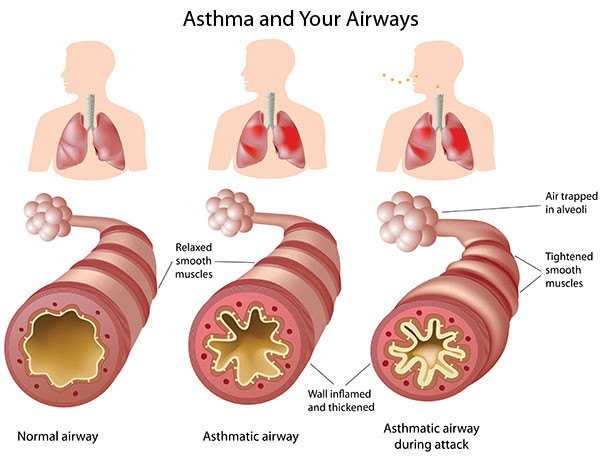
(1) Airway Obstruction: starts with tightening of the smooth muscles that surround tubes within the lungs, called bronchioles. These passages direct air from the trachea into little sacks called the alveoli, where oxygen exchange actually takes place. Restriction within the bronchioles causes wheezing and shortness of breath. The second process is
Although medical treatment with inhaled corticosteroid sprays can alleviate airway obstruction, they are not without risks. The side effects are no different than for taking steroid pills (Prednisone use is very common). These risks include abnormalities of the bones, eyes, and the immune system.
[4]
Prevention Will Be The Medicine of The Future
Right now, adopting some basic health strategies, before you have your next child can significantly reduce the risk that your child will ever develop asthma or allergies.
Children who are breast fed for their first 6 months experience
An extensive, Federally funded review of the medical literature by Tufts University revealed that a history of breastfeeding was also associated with a reduction in the risk for developing acute otitis media (middle ear infections), nonspecific gastroenteritis, severe lower respiratory tract infections, dermatitis and eczema, Type 1 and Type 2 diabetes, and childhood leukemia.
[7]
Although smoking during pregnancy has been found to
This protection occurs because mother’s milk contains a form of antibodies called immunoglobulins, so drinking her milk transfers the mother’s immunity to her infant. Children who receive antibiotics before their first birthday are significantly more likely to develop asthma, even in families with no history or risks for developing asthma.
Infants are often given antibiotics to treat middle ear infections, even though the CDC has been advising against the practice for decades, and numerous clinical trials have provided minimal results from repeated antibiotic use.
[12]
|
|


|
* Although these statements may have not been evaluated by the Food and Drug Administration, they are all drawn directly from the peer-reviewed scientific literature, and that's good enough for me! |