

Supplementation For |
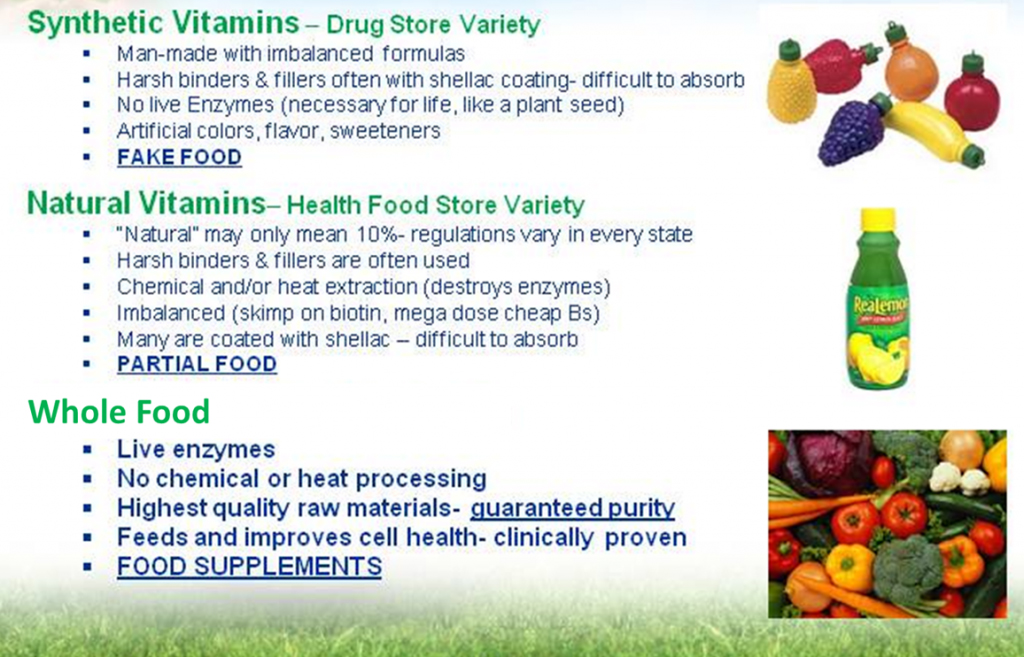 |
Although chemical companies like BASF would have you believe that synthetic vitamins or other manufactured nutrients are identical to the naturally occurring forms, that is just not so.
Our digestive tract preferentially absorbs LESS of them than their natural counterparts, and the body also chooses to excrete them more rapidly. [6], [7], [8], [9]
All of the large prospective studies of the last 40 years have shown that those individuals who eat the most fruits and vegetables also have the lowest incidence of the ALL diseases of old age:
cancer,
stroke,
pulmonary diseases (including pneumonia), and
stroke.
Those are the top killers of everyone above the age of 55.
[11]
 |
The Way Things Really Work
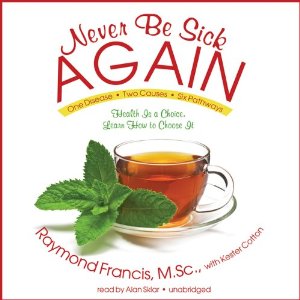
Raymond Francis, an MIT-trained scientist, writes in his best-selling book “Never Be Sick Again” about the biologic causes of disease.
[12]
The lack of nutrients in “modern foods” occurs because of bizarre food processing techniques (like removing wheat germ from grains before turning them into bleached flour) and industrial farm procedures that use chemical fertilizers and pesticides to force-grow our produce. Both of these approaches magnify the causes of disease by first reducing the nutrient content in our food, while also increasing our toxic load.
His conclusions are elegantly simple:
There is only one cause of disease — and that is the malfunctioning of our cells.
He goes on to demonstrate that there are only 2 reasons why cells malfunction:
Research clearly suggests that it is the LACK of these nutrients in our diet over time that leads to the cellular breakdown that eventually produces disease states.
And finally... supplementation is not supposed to be THE “cure” for disease! Prevention Models are about reducing our risk by making informed healthy choices. Numerous studies reported in the peer-reviewed literature have shown that supplementation can reduce disease symptoms and occasionally halt the progression of certain diseases, once they are full-blown, but prevention must always be our first choice.
[14]
Eat a diet rich in fruits and vegetables, get more of your protein from plant-based sources, and take supplements to fill in the gaps in your diet. That's what the rest of this newsletter will propose.

A Novel Study To The Rescue
As a reaction against the endless publication of failed single-substance studies, researchers at McMaster University (Canada) and the Institute of Mitochondrial Biology and Medicine (China) decided to explore the impact of taking a broad spectrum of nutrients on 2 groups of mice. [15]
Their formulation, including 30 different nutrients, was developed to target five key mechanisms associated with ageing: [16]
inflammation,
mitochondrial function,
insulin resistance, and
cell membrane integrity. [17], [18]
Of these, the most serious components of aging involve genetic and cell membrane damage, caused by free radicals. Cancer cells are produced by damaged DNA.
The cell membrane manages transport of food into the cell, and the elimination of waste products out of the cell. Damage to this transport system can either starve the cell, or pollute it with waste that can’t be eliminated.
In the non-supplemented group, mitochondrial (energy) production dropped to 46 per cent of youthful levels after the first year, where as the supplemented mice, exhibited a “remarkable 56 per cent gain in mitochondrial activity”, along with a significant gains in their physical activity levels. Lead researcher David Rollo noted that the supplemented mice were twice as physically active, and they also seemed to get smarter. When examining their brain tissues, they discovered that the supplemented brain cells experienced significantly less free radical damage — evidence suggesting this supplement cocktail made a big difference. Incidentally, the supplemented mice also lived 11 per cent longer, and when this supplement mix was given to grasshoppers, they lived twice as long as normal!
These researchers focused on 2 easily observed components of aging:
mental acuity and physical capacity.
The object of this study was to see if supplemented mice would remain more physically and mentally active than the unsupplemented mice.
The nutrients were blended to address two current theories of aging: The free radical theory and the mitochondrial theory, both which suggest that oxidative damage to our DNA and the cell membranes initiates the cellular decline that initiates the onset of the diseases of “old age”.
The supplements that targeted for mitochondrial performance included
carnitine, coQ10 and fish oil.
The antioxidants that targeted free radical damage included
vitamins A, C and E, selenium, and N-acetyl cysteine.
And the results?
Go to Page 3
|
* Although these statements may have not been evaluated by the Food and Drug Administration, they are all drawn directly from the peer-reviewed scientific literature, and that's good enough for me! |