NOTE: All the studies we will review are tagged with citation numbers like this: [2]
If you “click” on that red number, you will be transported to the actual study.
Many of the graphics can also be enlarged by clicking on them.
Shaklee and the Environment (cont.)

Their Get Clean products are Safe, Powerful, Green & Smart.
They are concentrated, nontoxic, and virtually 100% biodegradable, generating considerably less disposable packaging.
Even their containers are safe because they do NOT contain bisphenol A (BPA).
They don’t release chemical odors during or after their use, and this is especially important for anyone with fragrance sensitivities, asthma, or other respiratory issues.
The Power of One
My first love for Shaklee began with their cleaning products,
in particular Basic H
(now known as Basic H2). We all owe a debt of gratitude to
Cindy Latham for sheparding the
Get Clean line to completion!
I had hoped to regale you with how many bottles of Basic H have been produced since it’s inception in 1960, but sadly those figures are not available.
What I CAN do is to share the amazing impact of just one bottle.
An original quart bottle of Basic H could produce 6,900 – 22 oz. bottles of “Windex”, by simply adding 2 drops of concentrate into a 16 oz. spray bottle filled with water.
If you remember that “a pint’s a pound the world around”, then you know that a pint, or 16 fluid ounces equals 1 pound in weight.
So a 22 oz. bottle of Windex weights 1.375 pounds.
This ALSO means that the 6,900 bottles of Windex you get from only
1 bottle of Basic H would actually weigh 9,487 pounds! WOW!
Considering that the average delivery truck can only transport 5,000 pounds of freight,
to deliver that much Windex would take 2 trucks, along with 2 different drivers,
plus all that gas, just to get it from Johnson’s factory to your store.
I can’t begin imagine how much money you would save by using Basic H as a window cleaner, but I certainly can imagine not throwing two full truckloads of empty plastic bottles into the landfill! Take a bow folks!
That’s just a small measure of the impact of Dr. Shaklee’s dream for protecting our planet. The other “power of one” comes with your choice of using Basic H, rather than those truckloads of chemical cleaners.
What Does Biodegradable Mean?
There is no actually no legal definition for the term “biodegradable,” other than the suggestion that some of it will degrade over time. The term “biodegradable” is frequently applied to many products — even those that take centuries to decompose, or to those that break down into other harmful environmental toxins.
[8],
[10]
When Shaklee uses the term biodegradable, they mean that their product will totally break down into harmless natural compounds within 30 days or less. So, when you use Shaklee’s household products you contribute a net-zero impact on our water supply and the environment.
Endocrine-disrupting Chemicals
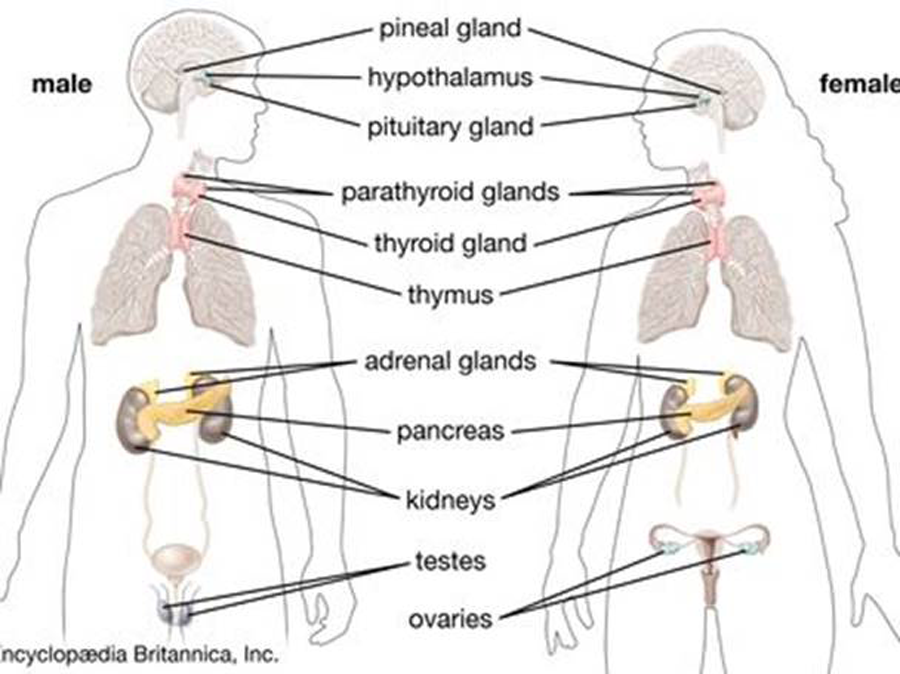
The Endocrine Syatem
|
Besides protecting the external world, we also need to protect our bodies. In the 1980s, scientists first observed that certain chemicals seeping into the waterways caused reproductive and organ abnormalities in fish and land animals. The first endocrine-based symposia was held in 1991, and their findings finally achieved public attention in 1996 through the book, Our Stolen Future. Many different products, from pesticides to everyday plastics, contain what they termed endocrine-disrputing characteristics, for their ability to inhibit the normal function of our hormonal (Endocrine) system.
Some of these types of chemicals are found in such innocuous products as cosmetics. This is why you should NOT microwave food in plastic containers, because that accelerates the release of chemicals like bisphenol A into your food.
[11]
Children Are at Greater Risk
Children are especially vulnerable to chemical toxins. Infants spend a good deal of time crawling about and putting things in their mouths, so there’s always the potential for ingesting chemical residues. Many of the most “trusted brands” of household cleaners continue to include harsh chemicals in their formulations.
Because a baby’s immune system and metabolic pathways are immature, this attenuates their ability to either metabolize, detoxify, or excrete toxic chemicals. The blood-brain barrier that protects our adult brain from absorbing neuro-toxins, is NOT fully developed in children, so early exposures are especially risky.
[12]
Go to Page 3
|
|
|