Nutrition Made Personal (continued)

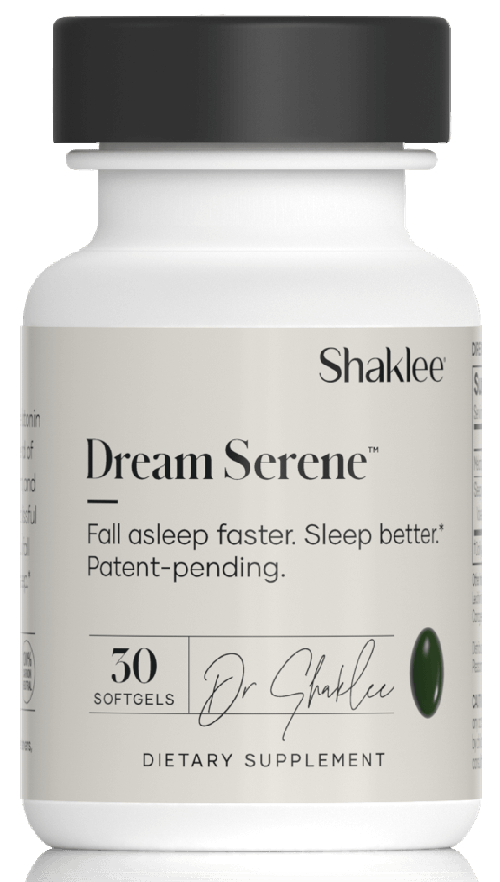
Dream Serene
 |
As we reviewed in a previous newsletter on stress (32-6) one of the major contributors to the decline in physical and mental health status is because stress disrupts our sleeping pattern(s). That has contributed to the growing popularity of sleep aids over the last few decades.
The big winner of the Snooze Sweepstakes is melatonin. Last month I thought collagen was a big hit with one million Google hits, but that’s peanuts compared to melatonin’s 18 million hits.
Thank heavens that I did not need to rely on Google to locate accurate scientific studies. With all this “popularity”, Google swarms with all the usual snake oil companies, and endless “Best of 5 (or 10)” referral websites. That alone should keep the FDA busy for the next century. (LOL!)
Disrupted sleeping patterns are such an important topic that the British Journal of Pharmacology devoted a whole issue to the importance of melatonin for human health (that issue features 9 different articles) on melatonin.
[7]
The article of interest from this issue explains that: “In mammals, a central circadian clock, located in [a portion of] the hypothalamus, tunes [our] innate circadian rhythms to the 24-hour light-dark cycle.”
[8]
When it starts to get dark, our brain begins to produce melatonin, and several hours later we should start to become sleepy. That process worked perfectly until sometime during the 20th Century, when universal electrical lighting lit all our homes and streets, so that we could shop all night, or watch TV, or surf the web all night.
Their article
[8]
goes on to sum up all the melatonin studies for sleeping disorders associated with diminished or misaligned melatonin rhythms, including circadian rhythm-related sleep disorders, including jet lag, shift-work insomnia, and insomnia in children with neurodevelopmental disorders, and including their impact on Alzheimer's disease.
Although this article
[8]
includes a lengthy discussion of how melatonin deficiency contributes to the onset of Alzheimer's disease, it also clearly emphasizes the role of melatonin in the restorative value of sleep, and how that contributes to better physical and mental health.
A 2017 study by researchers from the University of Guleph in Ontario, Canada, tested 31 different melatonin supplements, including 16 different manufacturers. The products were all purchased from local groceries and drugstores, and included a range of formulations, including liquid drops, gel capsules, and chewable tablets.
[9]
The Bad News?
The actual melatonin content of those products ranged from 83% less to 478% more than the amount listed on the label, with most products (21 out of 31) failing to fall within 10% of the label claim.
Variability within individual products was also very high; some products differed by as much as 465% in their melatonin content, from one package to the next of the same product!
Worse yet, 26 percent of the 31 tested supplements contained serotonin, a hormone that may produce harmful effects, even at relatively low levels.
[9]
According to the National Center for Complementary and Integrative Health, the recommended safe melatonin dose for adults is somewhere between 0.5 and 5 milligrams of melatonin.
[10]
This is why Shaklee used the conservative dose of 2 mg, while coupling it with a proprietary blend of valerian root extract, lemon balm leaf extract, and L-theanine, to promote safe and restful sleep.
[11]
The onset of menopause is frequently associated with sleep disruption. For that reason, Iranian researchers decided to perform a randomized clinical trial to determine whether a combination of valerian and lemon balm might improve women’s sleep patterns.
[12]
They worked with a group of 100 menopausal women 50-60 years of age. They were randomly assigned into 2 groups, one as the “intervention group” with valerian/lemon balm, and the other as the placebo (control) group.
This study is particularly noteworthy because a previous “safety study” had concluded that high doses of valerian (400-900 mg) were required to reduce sleep disorders.
However, this succeeded by used a much lower dose (160 mg) because they combined it with lemon balm, and the results far exceeded the earlier safety study results.
[11]
It’s very easy to see why Shaklee emulated their results, to produce this new, safe and effective sleep product.
Interactions with medicines
As with certain other herbal supplements, people who are taking a prescription medicine should consult with their health care provider before using melatonin. In particular, people with epilepsy, and those taking blood thinner medications need to be under medical supervision while taking a melatonin supplement.
[11]
Dream Serene also contains L-theanine, an amino acid found almost solely in tea plants (Camellia sinensis). A recent study by the United States Army Graduate Program, seeking ways to help posttraumatic stress disorder (PTSD) found that L-theanine reverses the effects of caffeine, thus providing relaxation effects.
[12]
The authors state that, based on these research findings, L-theanine would be a useful addition to the treatment regimen for a variety of psychologic disorders, ranging from PTSD, to anxiety, mood disorders, and even for recovery from substance dependence.
[13]
Dream Serene
|
|
As we reviewed in a previous newsletter on stress (32-6) one of the major contributors to the decline in physical and mental health status is because stress disrupts our sleeping pattern(s). That has contributed to the growing popularity of sleep aids over the last few decades.
The big winner of the Snooze Sweepstakes is melatonin. Last month I thought collagen was a big hit with one million Google hits, but that’s peanuts compared to melatonin’s 18 million hits.
Thank heavens that I did not need to rely on Google to locate accurate scientific studies. With all this “popularity”, Google swarms with all the usual snake oil companies, and endless “Best of 5 (or 10)” referral websites. That alone should keep the FDA busy for the next century. (LOL!)
Disrupted sleeping patterns are such an important topic that the British Journal of Pharmacology devoted a whole issue to the importance of melatonin for human health (that issue features 9 different articles) on melatonin.
[7]
The article of interest from this issue explains that: “In mammals, a central circadian clock, located in [a portion of] the hypothalamus, tunes [our] innate circadian rhythms to the 24-hour light-dark cycle.”
[8]
When it starts to get dark, our brain begins to produce melatonin, and several hours later we should start to become sleepy. That process worked perfectly until sometime during the 20th Century, when universal electrical lighting lit all our homes and streets, so that we could shop all night, or watch TV, or surf the web all night.
Their article
[8]
goes on to sum up all the melatonin studies for sleeping disorders associated with diminished or misaligned melatonin rhythms, including circadian rhythm-related sleep disorders, including jet lag, shift-work insomnia, and insomnia in children with neurodevelopmental disorders, and including their impact on Alzheimer's disease.
Although this article
[8]
includes a lengthy discussion of how melatonin deficiency contributes to the onset of Alzheimer's disease, it also clearly emphasizes the role of melatonin in the restorative value of sleep, and how that contributes to better physical and mental health.
A 2017 study by researchers from the University of Guleph in Ontario, Canada, tested 31 different melatonin supplements, including 16 different manufacturers. The products were all purchased from local groceries and drugstores, and included a range of formulations, including liquid drops, gel capsules, and chewable tablets.
[9]
The Bad News?
The actual melatonin content of those products ranged from 83% less to 478% more than the amount listed on the label, with most products (21 out of 31) failing to fall within 10% of the label claim.
Variability within individual products was also very high; some products differed by as much as 465% in their melatonin content, from one package to the next of the same product!
Worse yet, 26 percent of the 31 tested supplements contained serotonin, a hormone that may produce harmful effects, even at relatively low levels.
[9]
According to the National Center for Complementary and Integrative Health, the recommended safe melatonin dose for adults is somewhere between 0.5 and 5 milligrams of melatonin.
[10]
This is why Shaklee used the conservative dose of 2 mg, while coupling it with a proprietary blend of valerian root extract, lemon balm leaf extract, and L-theanine, to promote safe and restful sleep.
[11]
The onset of menopause is frequently associated with sleep disruption. For that reason, Iranian researchers decided to perform a randomized clinical trial to determine whether a combination of valerian and lemon balm might improve women’s sleep patterns.
[12]
They worked with a group of 100 menopausal women 50-60 years of age. They were randomly assigned into 2 groups, one as the “intervention group” with valerian/lemon balm, and the other as the placebo (control) group.
This study is particularly noteworthy because a previous “safety study” had concluded that high doses of valerian (400-900 mg) were required to reduce sleep disorders.
However, this succeeded by used a much lower dose (160 mg) because they combined it with lemon balm, and the results far exceeded the earlier safety study results.
[11]
It’s very easy to see why Shaklee emulated their results, to produce this new, safe and effective sleep product.
Interactions with medicines
As with certain other herbal supplements, people who are taking a prescription medicine should consult with their health care provider before using melatonin. In particular, people with epilepsy, and those taking blood thinner medications need to be under medical supervision while taking a melatonin supplement.
[11]
Dream Serene also contains L-theanine, an amino acid found almost solely in tea plants (Camellia sinensis). A recent study by the United States Army Graduate Program, seeking ways to help posttraumatic stress disorder (PTSD) found that L-theanine reverses the effects of caffeine, thus providing relaxation effects.
[12]
The authors state that, based on these research findings, L-theanine would be a useful addition to the treatment regimen for a variety of psychologic disorders, ranging from PTSD, to anxiety, mood disorders, and even for recovery from substance dependence.
[13]
Go to Page 4
|
|
|